By Frances Drost
Not everyone has a teacher who changes the trajectory of their life.
I did.
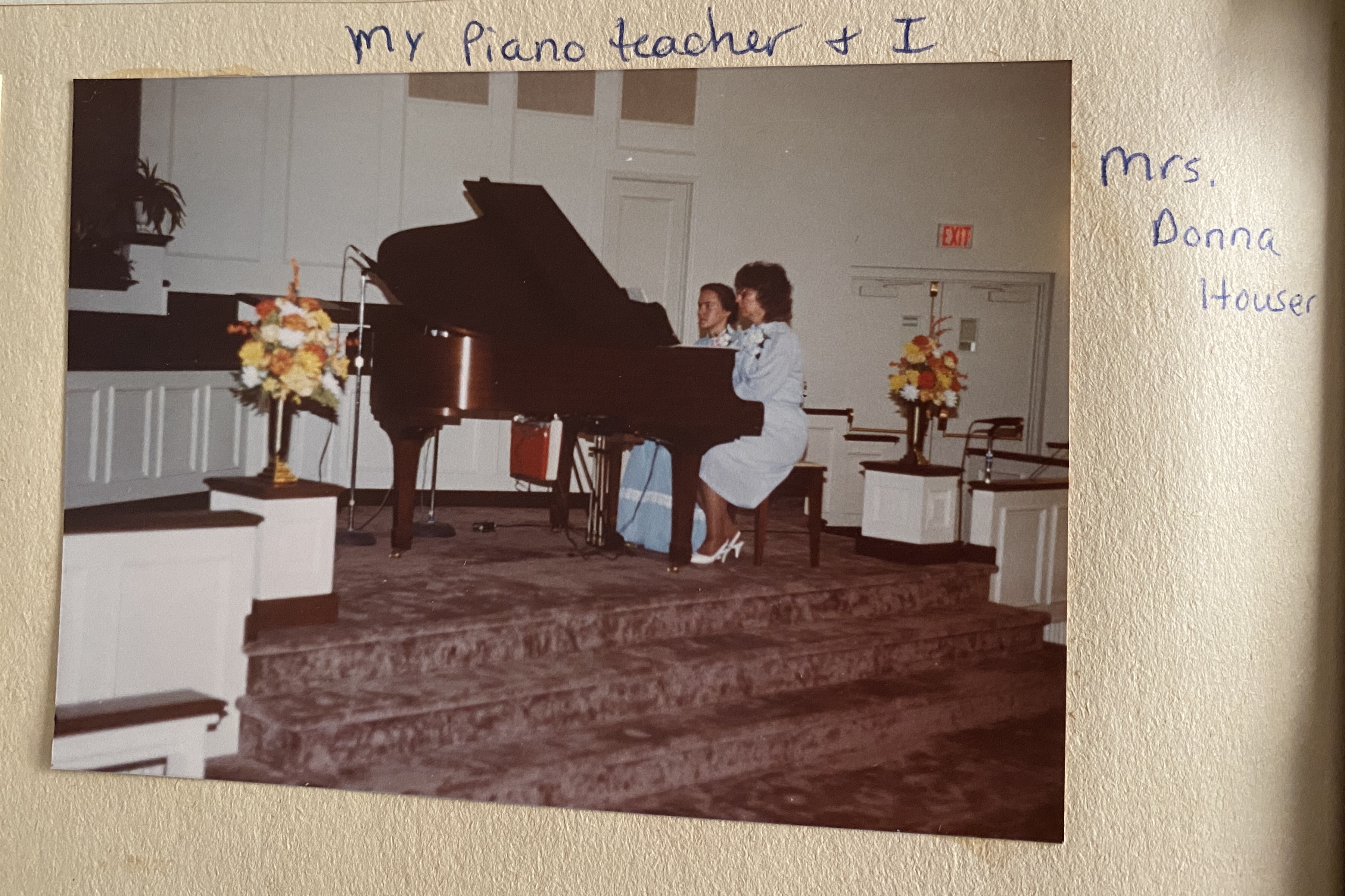
Her name was Donna Houser — my piano teacher from seventh to twelfth grade — and if you’ve ever attended one of my concerts, heard one of my recordings, or watched Double Keyed take a stage, you’ve seen the ripple effect of her influence.
If I had to describe her role in my life in one image, it would be this: she was a master at turning pages, a skill I didn’t fully appreciate until I had to turn them on my own.
Anyone who plays the piano knows that turning the page is one of the most vulnerable moments in a performance.
Your hands are busy.
Your mind is racing.
And if you miss the moment, everything can unravel quickly.
After giving up paper sheet music years ago, I now use an iPad and foot pedal. Efficient. Sleek. Modern. Also… occasionally temperamental.
Last November, during Double Keyed’s London Conversation in Song concert, I had one of those moments when everything unraveled.
Of all places, it happened on the final song of the night.
My foot pedal, usually somewhat reliable, chose that evening to misbehave.
We recovered. Musicians always do.
But that wasn’t the moment that stayed with me.
What stayed with me was an empty seat.
Donna wasn’t there.
She had planned to attend. I even had flowers ready to present from the stage. But when I called her name, she wasn’t in the audience.
Her husband, Ken, gently shared with everyone that Donna, living with Alzheimer’s, had one of those disorienting moments and needed to stay home.
The pedal glitch faded.
Her absence did not.
That night, I realized I needed to do two things.
Rethink my page-turning strategy…
And go see Donna.
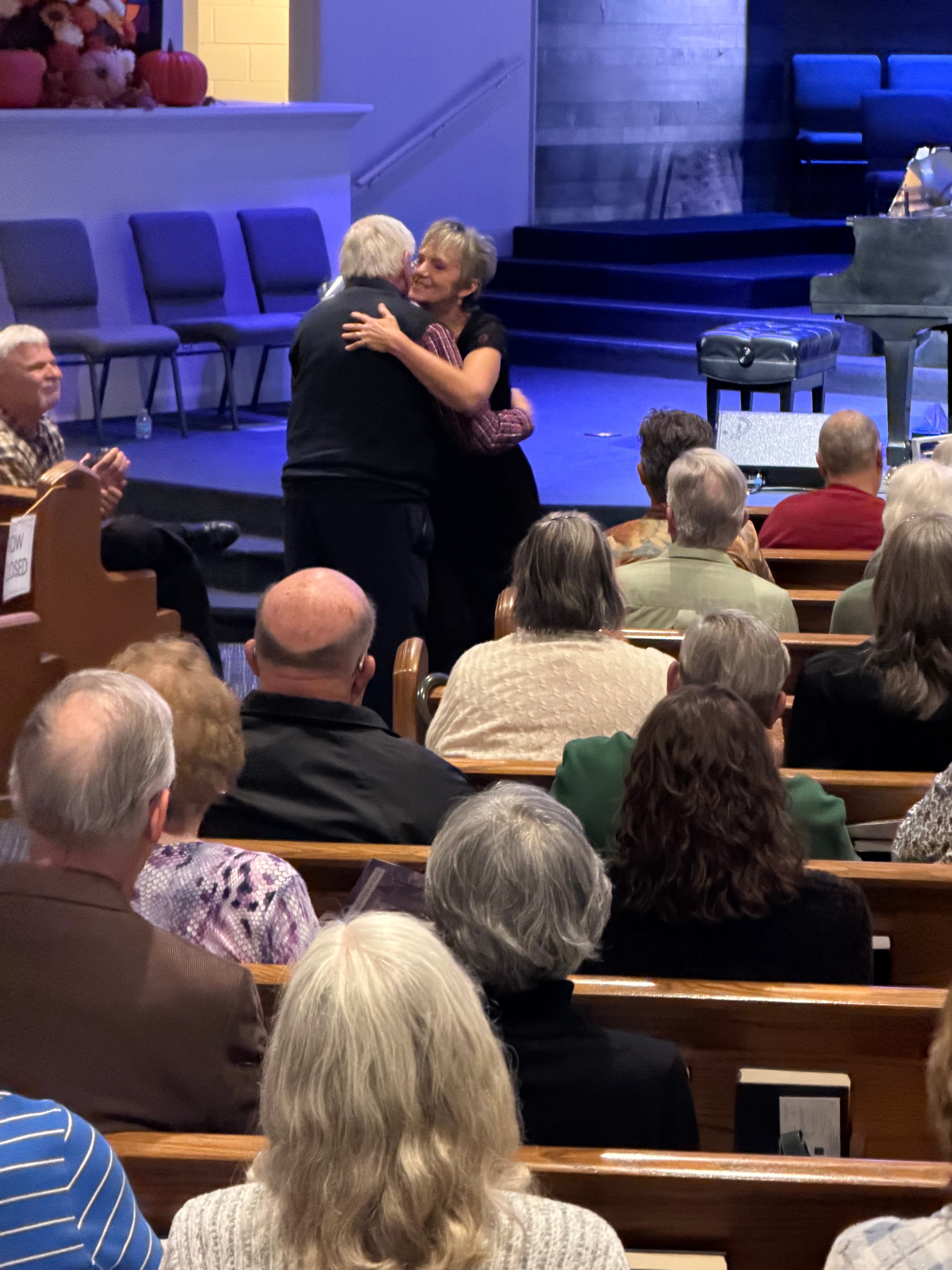
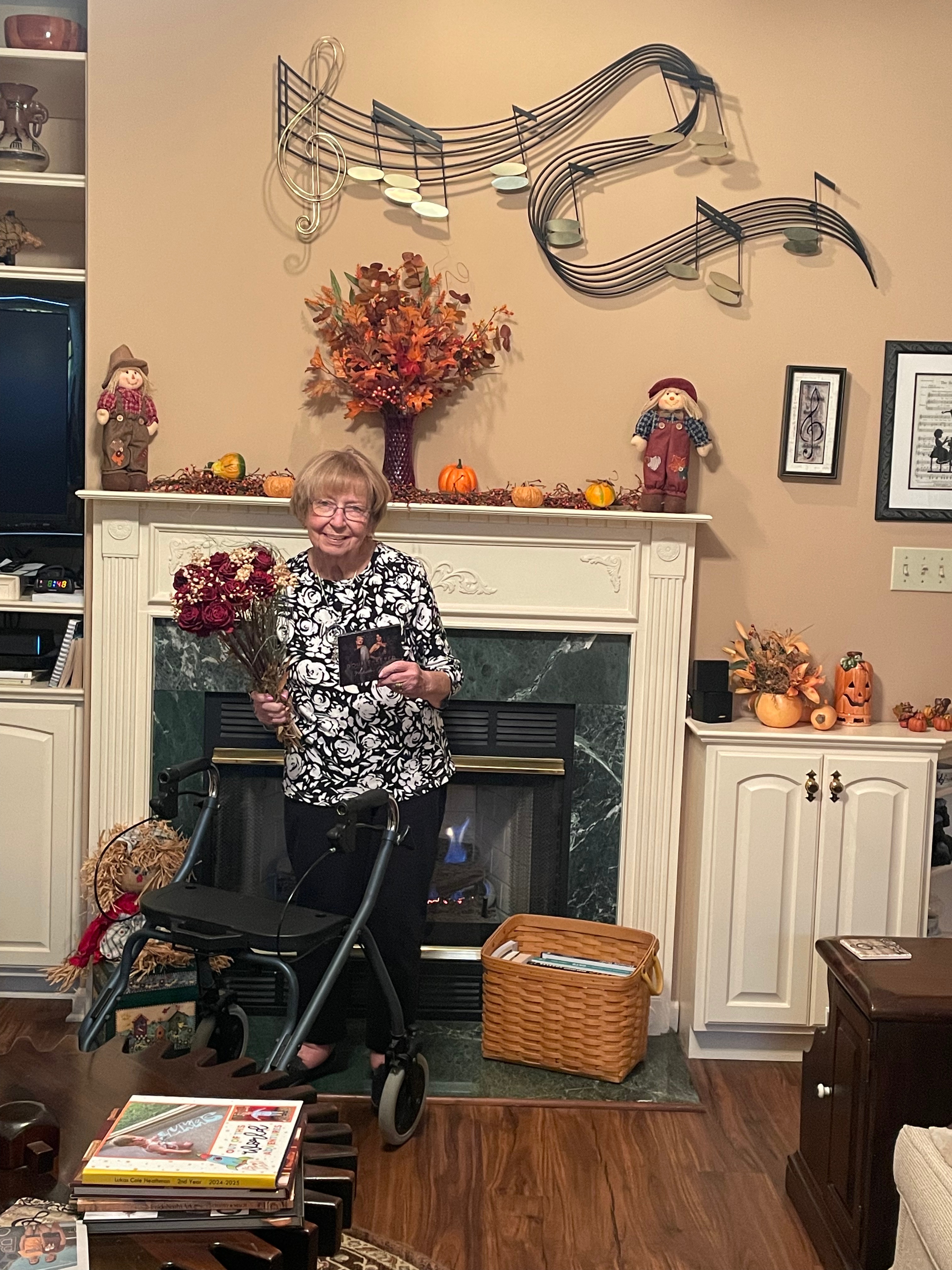
The first visit was in the hospital. I wore one of my long music-print dresses, hoping it might spark recognition. As I was leaving, she woke briefly. And while I’m not sure she recognized me, her eyes rested on the piano keys on my dress and I saw a spark of joy.
That felt like enough.
I quietly resolved to visit her again. The sooner, the better.
On the drive home, I started thinking about how she first became my teacher.
Because long before she was sitting in my audience… she was the one turning pages for me.
And there were a few important page turns before she even entered my life.
Before Donna, my first piano teacher was more like a sweet grandmother than a page turner — lots of encouragement, lots of listening, and maybe just a little too much oohing and aahing over my ability to play by ear. It was a free-flowing, joyful season, just what I needed at the time, especially as my mother was living with the lingering effects of spinal meningitis.
Yet even in the middle of her own illness, my mother was paying attention to my musical journey. She could see something forming. And she wanted to be sure I could truly read music, not just imitate it.
So she gently turned a page.
And that’s when Donna Houser entered my life. I was in seventh grade.
Donna didn’t just admire my playing. She examined it.
If she played something for me, I could copy it; tone, rhythm, expression — all of it, without much effort. In other words, if you sing something to me, I can sit down and play it back to you.
But the moment she stopped playing?
I struggled.
Because I wasn’t really reading. I was relying on my ear.
So she introduced a new page, one I would call Foundations.
“Yes, you’re gifted,” she seemed to say, “but let’s make sure you understand what you’re doing.”
She had this remarkable way of admiring the gift while filling in the gap.
With her, I moved from instinct to understanding, from playing by ear to discipline, structure, and true literacy at the piano.
And she didn’t stop turning pages.
Early on, she told my mother she believed I could write music. That idea took years to unfold, but she was the first to name it.
Then came another page.
Donna moved from a spinet to a shiny black baby grand, reserved only for the “good” students.
I made the cut. Phew.
Playing that grand piano… feeling the responsiveness of the keys and the resonance of the soundboard… was worth the effort it took to be allowed to play it. I would learn to read music, if for no other reason than to sit at that grand.
And from that moment on, I carried a quiet prayer:
Someday…
The Page Called Recitals
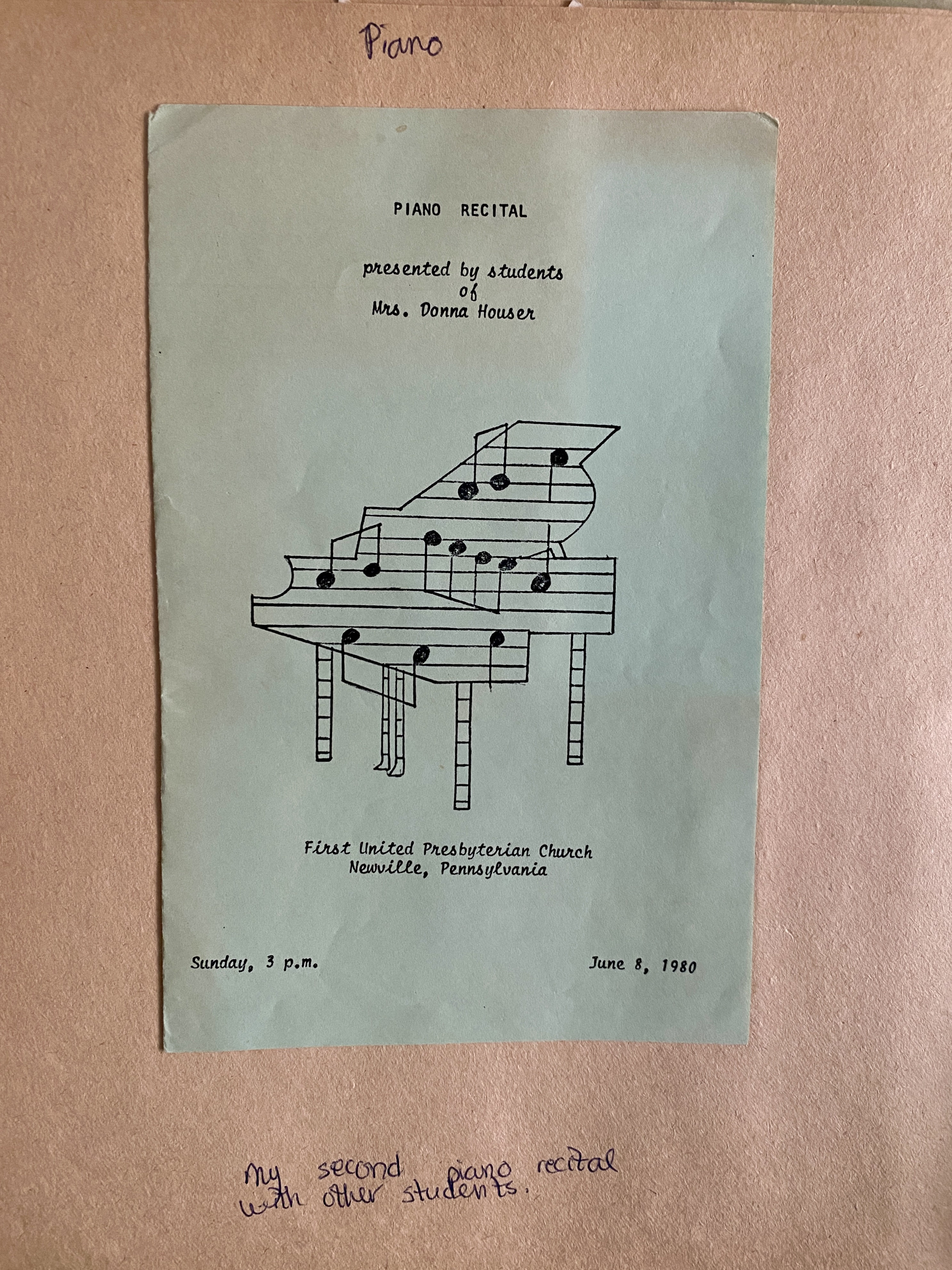
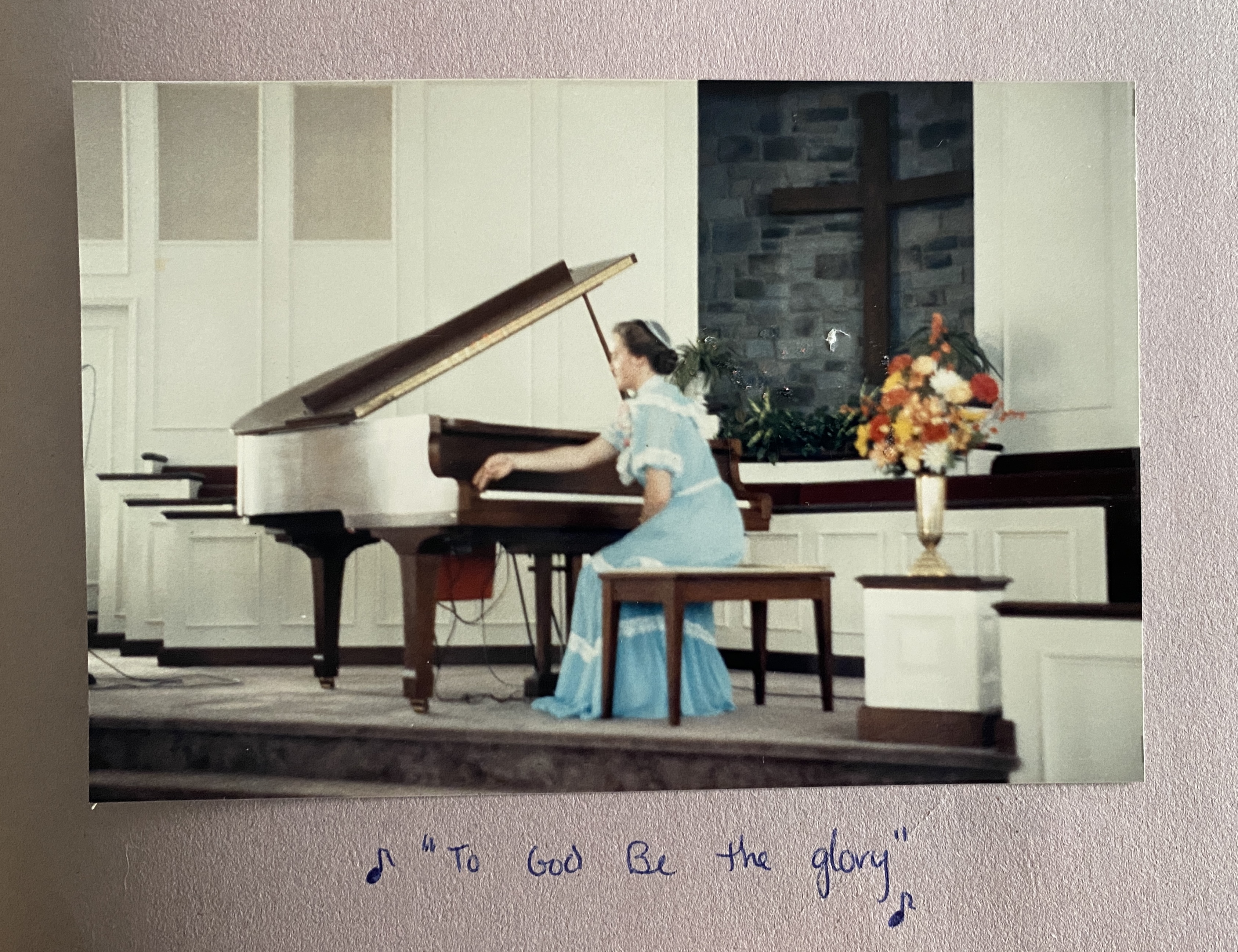
Then came the page called Recitals — my favorite page.
I moved from living-room concerts in our farmhouse to real recitals, with actual programs and bigger audiences.
I loved everything about it, the months of practicing, the memorizing, the stage, the gathering of people.
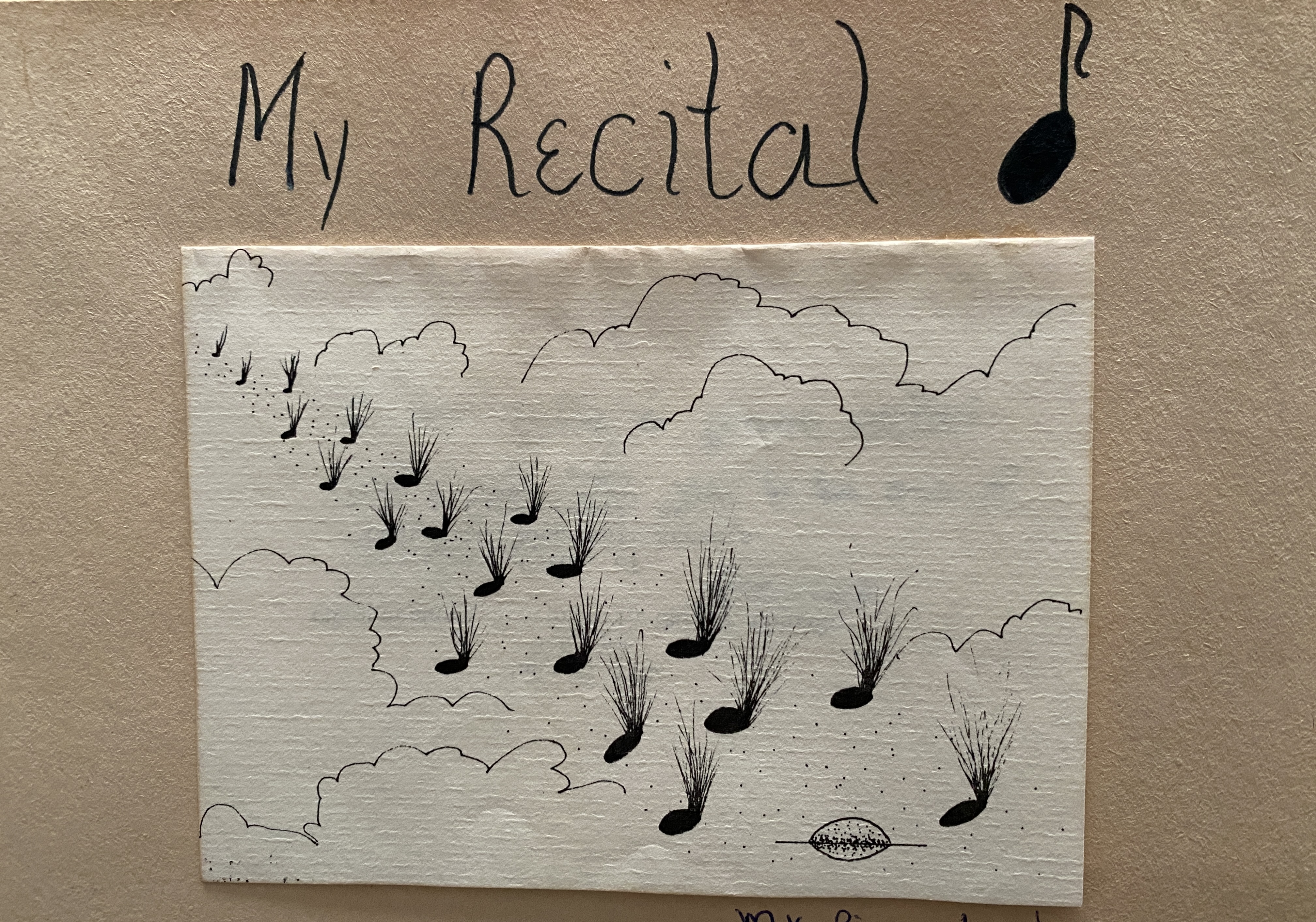
I loved it so much that I began asking if I could host my own recitals, complete with typed programs and refreshments.
That stretched my conservative mother.
She valued modesty. Simplicity. Staying small. Staying safe.
I… was discovering that I didn’t feel small inside.
And yet, she still helped address invitations.
She prepared the refreshments.
She supported my ideas.
Those early recitals awakened something in me… a desire to create experiences where music, story, beauty, and hospitality came together.
Over time, those small concerts grew into larger productions. And as they grew… so did the stretch between our perspectives. My mother and I didn’t see the stage the same way.
It wasn’t rebellion on my part. I think of it more as a quiet ache that sometimes lives between generations… when one person sees risk, and the other sees calling.
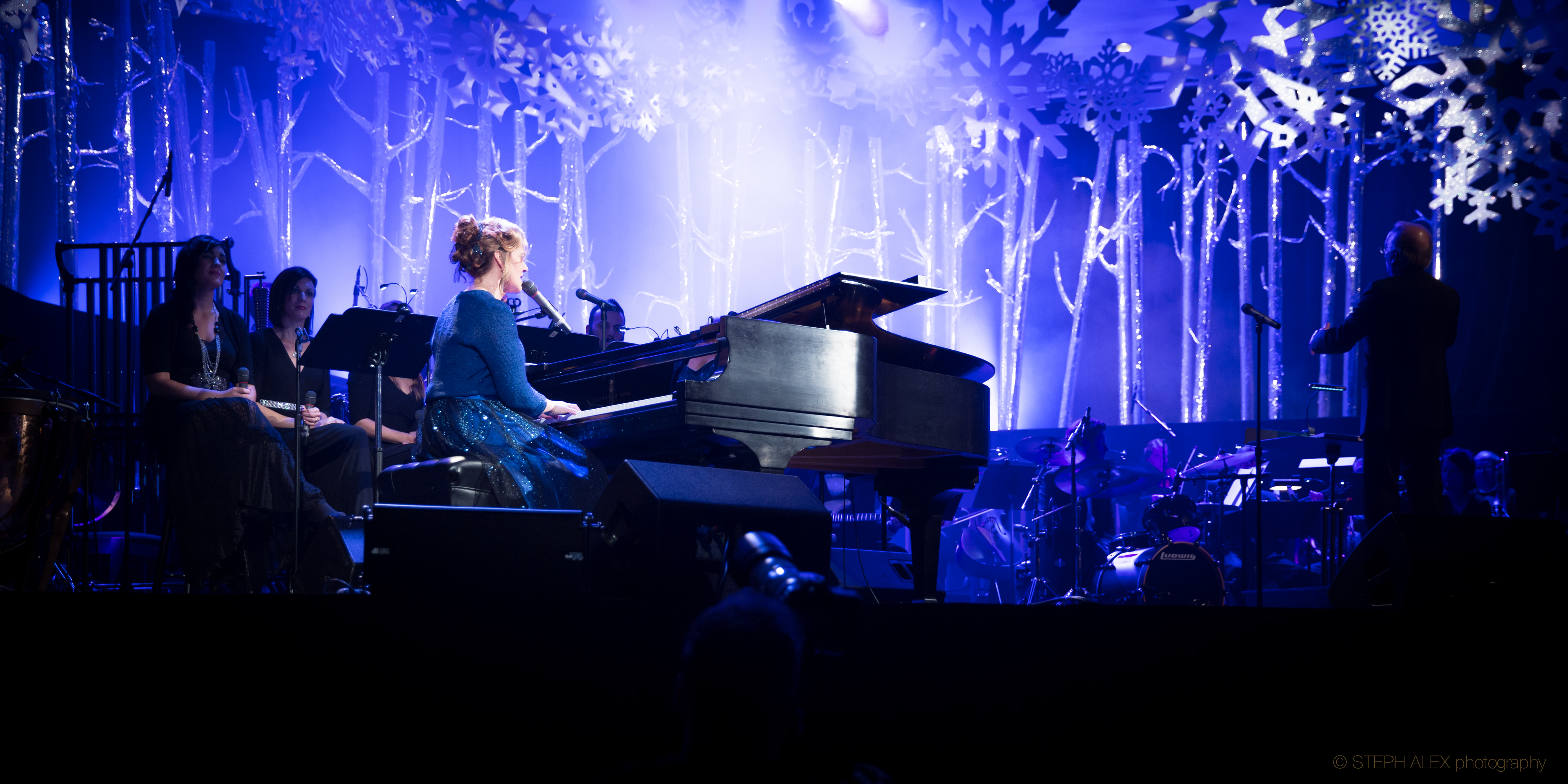
Eventually, that calling became Portraits of White: an annual Christmas experience with live orchestra and storytelling.
As Portraits of White was coming to life in 2014, I prayed a little more boldly:
“If You’re in this vision… would You please help me get a grand piano? Shiny. Black. Yamaha.”
A few weeks later, on a snowy day, my own shiny black Yamaha grand was delivered to my studio. It was also my mother’s birthday.
And then, just a few months before the debut concert, my mother passed away.
Her absence created a space I hadn’t anticipated.
Not just on the front row, but in my heart.
And into that space… Donna came.
Year after year, she showed up for Portraits of White. She sat in the audience. She listened. She encouraged.
She moved from teacher to audience member, without ever losing her steady encouragement.
In that season, her presence meant more than she probably ever knew.

Shared Joy
Then came a page I call Shared Joy.
When my duo, Double Keyed, was nominated for an award, I didn’t know how to pick out champagne, so I played it safe and bought sparkling grape juice and showed up at Donna’s house unannounced.
We never even opened it.
What mattered wasn’t the drink. It was who I shared the moment with.
She and Ken later surprised me by showing up at the ceremony.
She would always be my piano teacher.
But that night, she felt like family.
One Last Page
These days, Double Keyed is working on the most demanding project of our lives; recording with the London Symphony Orchestra.
And in the middle of it all, I realized how much I missed my teacher.
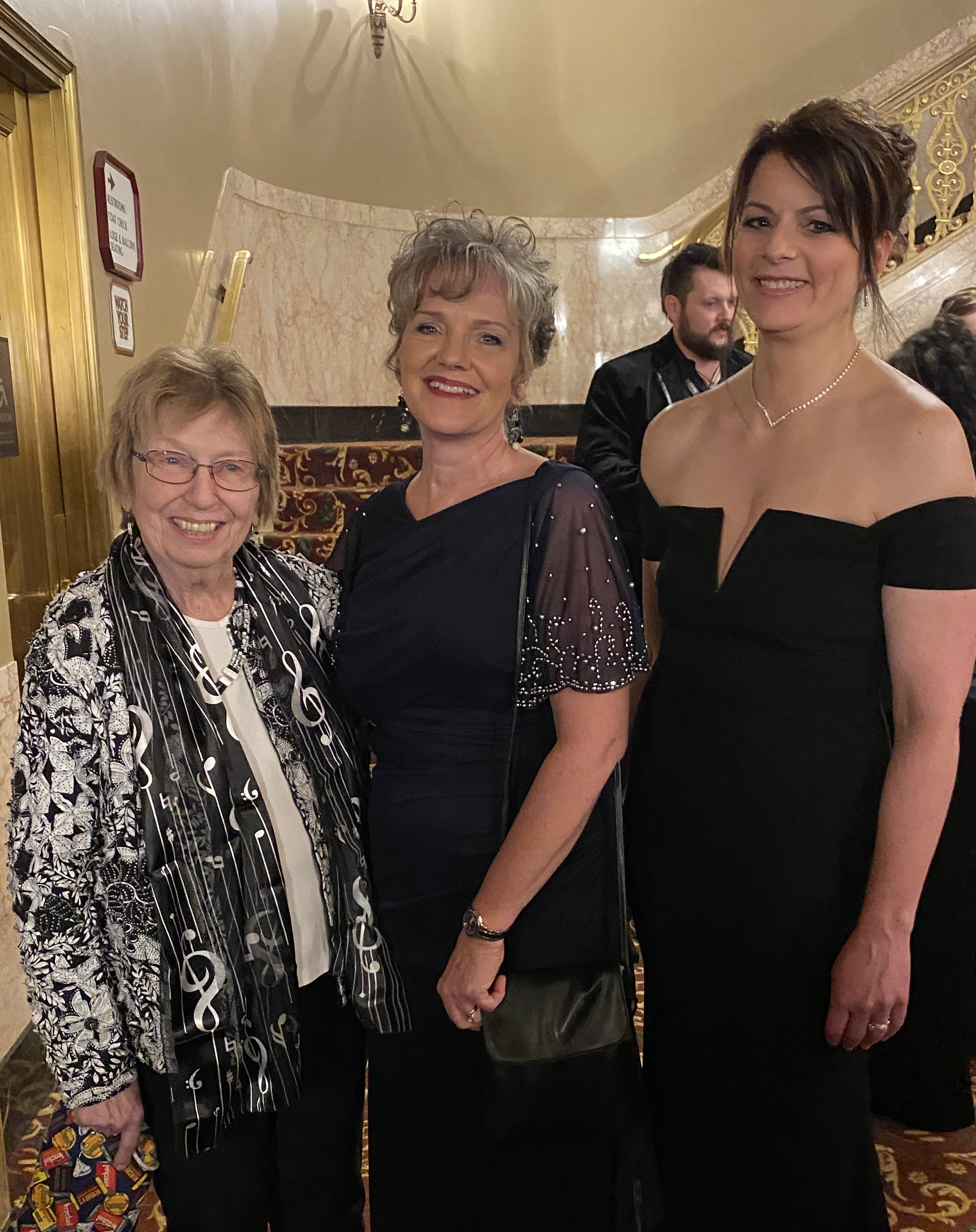
So on December 23, 2025, I stopped to visit Donna, at her temporary room at Thornwald Home. I didn’t go with an agenda. I just thought sitting together and talking music might be good for both of us.
And it was.
We were both in tender seasons, she living with Alzheimer’s, and I stepping into the biggest project of my career.
As we talked shop, I admitted something humbling: even after all these years, one of the hardest parts of classical playing for me is turning the page… even with all my modern gadgets.
“Do you have any advice?” I asked.
And suddenly, there she was.
Her eyes lit up. Her posture straightened.
“Find someone who reads music well,” she said in her teacher voice. “Someone who isn’t easily distracted. And practice with them.”
I smiled and asked, “Should they sit on the piano bench?”
“NO!” she said firmly. “They sit beside you. And you practice ahead of time.”
In that moment, she wasn’t fragile. She wasn’t fading. She was my teacher.
I didn’t know that would be our last conversation.
All 88 Keys
When Ken asked me to play at Donna’s service, I knew immediately what I would share.
During COVID, when concerts were canceled and time slowed down in ways I didn’t expect, I created an arrangement of Great Is Thy Faithfulness. And, in a moment of complete piano-player self-indulgence, I decided to use all 88 keys… weaving together the notes on the page she trained me to read and the patterns my ears and heart were hearing as I shaped it. Decades of process wrapped into five and a half minutes. My life story, on 88 keys.
It felt fitting to play that piece for Donna, not just as her student, but as the musician, colleague, and friend she had helped me become.
It was an arrangement I created, built on the foundations she insisted on and strengthened by the encouragement she continued to give long after the lessons ended.
It was the sound of everything she poured into me — still playing.
Thank you, Donna.
I miss you.
If you’d like to watch Donna’s Celebration of Life service — including the tribute and the arrangement I played — you can view it here:
(The service begins at 24:20, following the prelude and slideshow. The piano music in the prelude is Donna’s.)
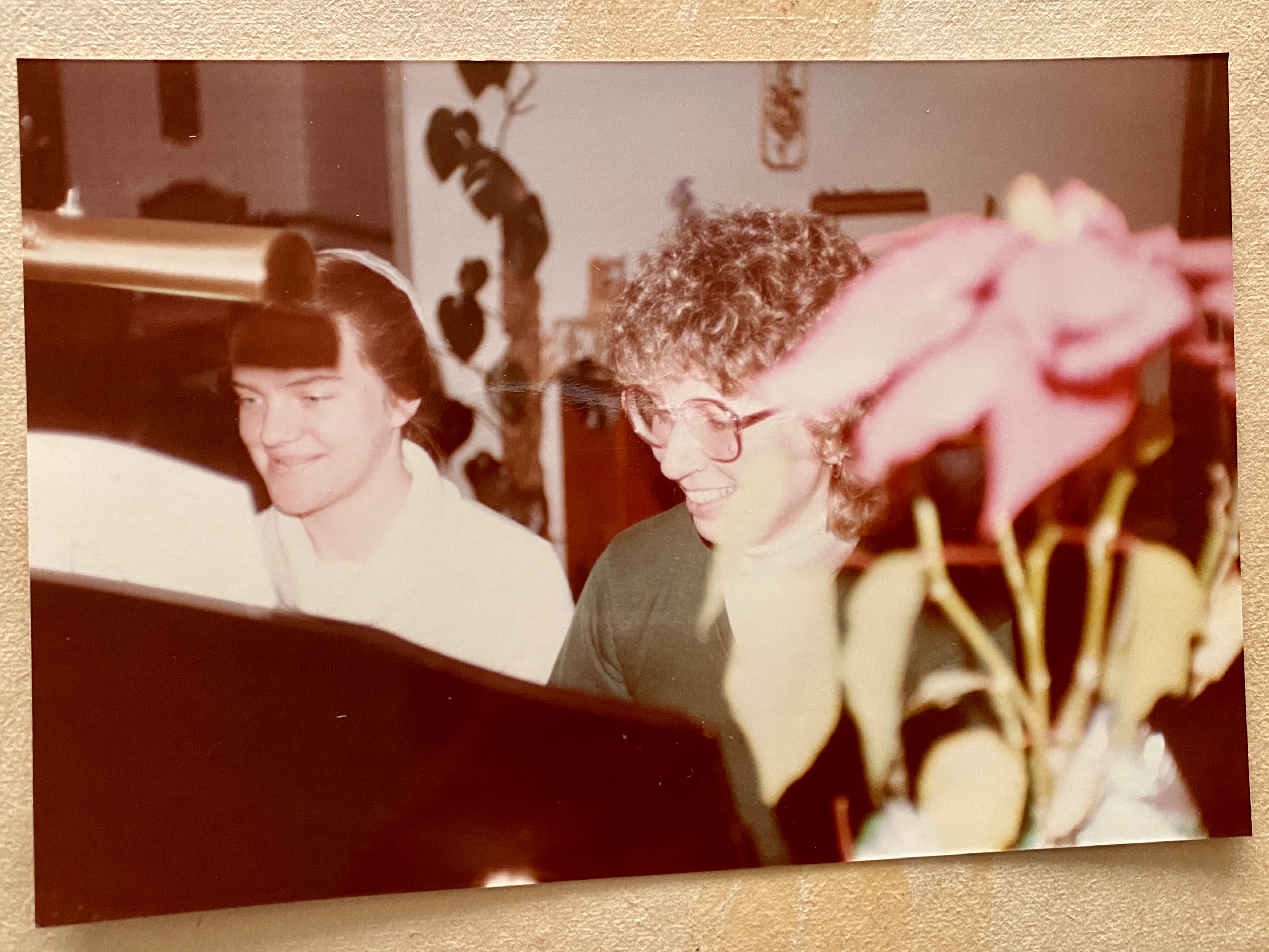
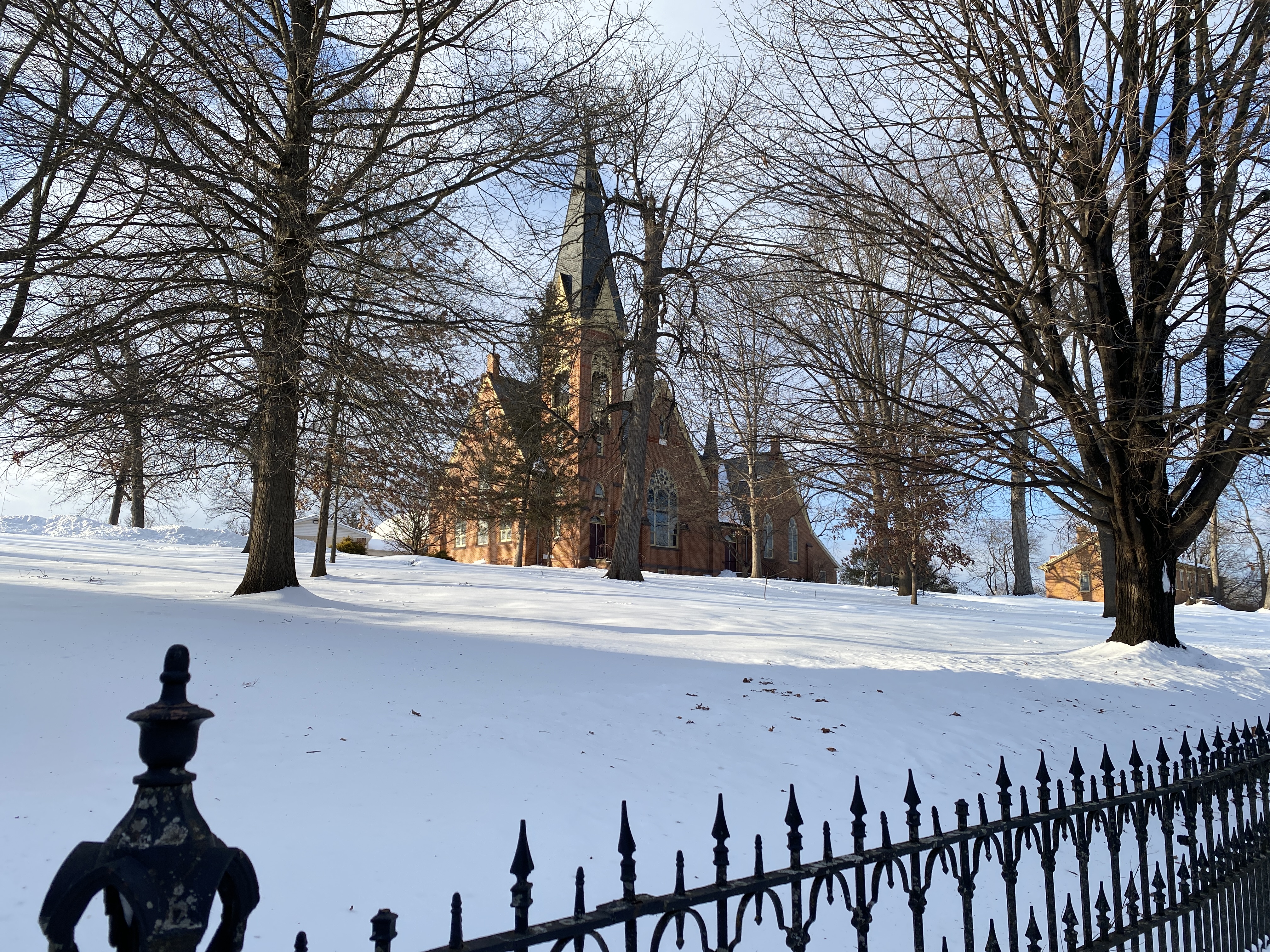
Highlights from my musical scrapbook:


 Frances Drost
Leave a comment