During the holidays, I finally did something that had been long overdue — I cleaned off my desk in my studio office.
To be honest, it had reached the point where I needed emergency help.
So I asked ChatGPT if it would help me organize my life… starting with my office.
A plan appeared on my screen.
I still had to do the work. 🙂
The most terrifying suggestion was simple:
Set a timer for 20 minutes. Clear everything off the desk.
Papers were to go into one designated box (to be sorted later). Everything else had to be removed completely — even the lamp. The promise was this: if my brain could see only a clear desk, it could ignore the clutter piled behind me.
I clung to that promise.
As I cleared the desk — item by item — I could feel the piles stacking up behind me, taking up space.
Trust the system, I kept telling myself.
When the timer went off, my desk was completely empty.
It felt amazing.
I was hooked.
I moved on to the next countertop in my office, and then the next. Over the following weeks, as I worked through the piles, I uncovered buried treasures — projects I had stashed away for a later date.
You know… that mythical season when there’s nothing else going on in life.
(Insert laughter here.)
After years of ideas collected and deferred — especially as my creative focus needed to stay centered on my Christmas-season work (thank you, Portraits of White and Midwinter’s Gift) — other ideas had quietly waited their turn.
Piles of ideas.
Add to that the growing number of papers and plans Double Keyed has accumulated as we move forward with our London Symphony project, and my increasingly cluttered desk began to make sense.
It also explained my overwhelm.
As I began reorganizing my dreams and ideas into banker boxes, something unexpected happened.
My creative heart stirred.
With a clean, newly organized office, I realized the advice had been right — my brain could think again. More than that, it could think creatively again.
That moment made me pause.
Not because I needed more ideas — but because it reminded me how creativity actually works.
And that’s what led me to write this post.
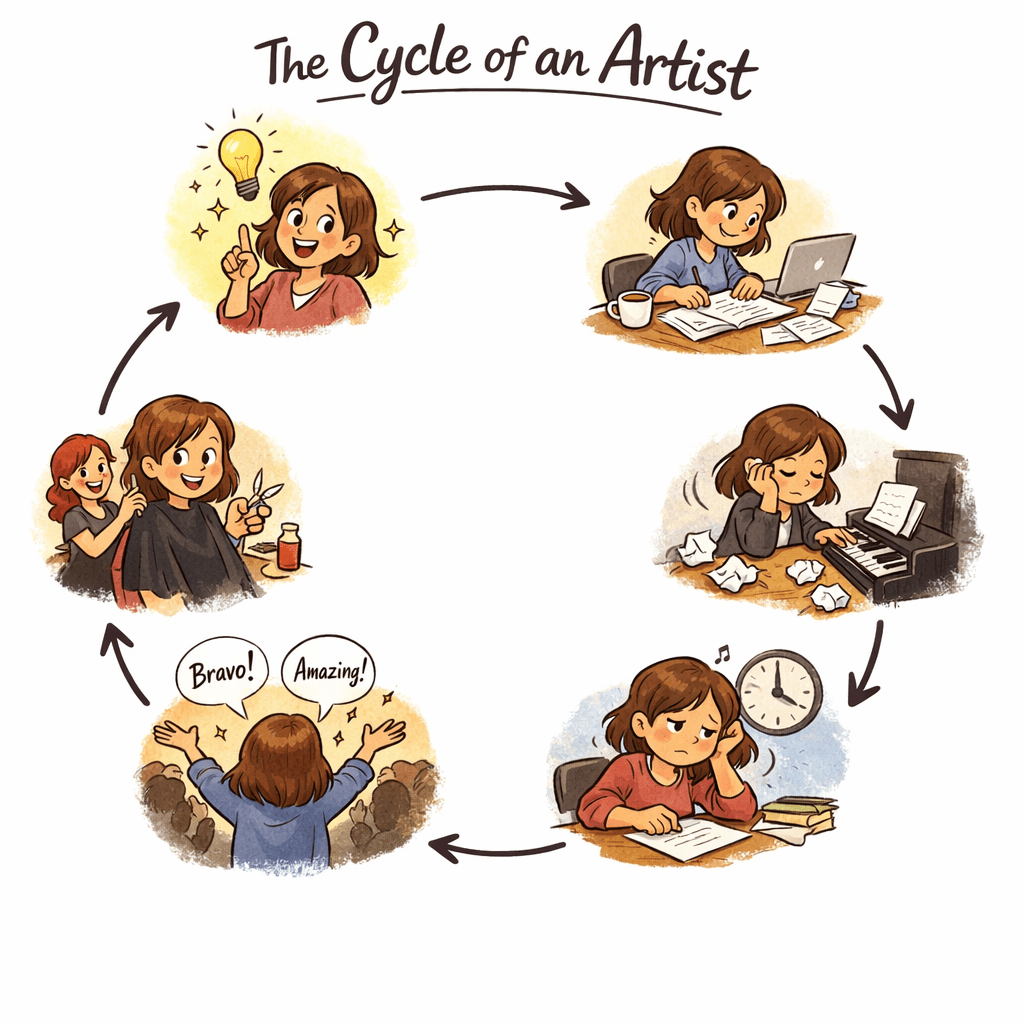
The Cycle of an Artist
Over time, I’ve come to recognize a familiar rhythm to creative work.
There’s the spark of an idea, the planning, the long middle where the real work happens, the release into the world, and that quiet moment afterward when the energy shifts and something new begins to stir.
I’ve lived this cycle enough times now to trust it.
Not rush it.
Not fight it.
Just recognize it.
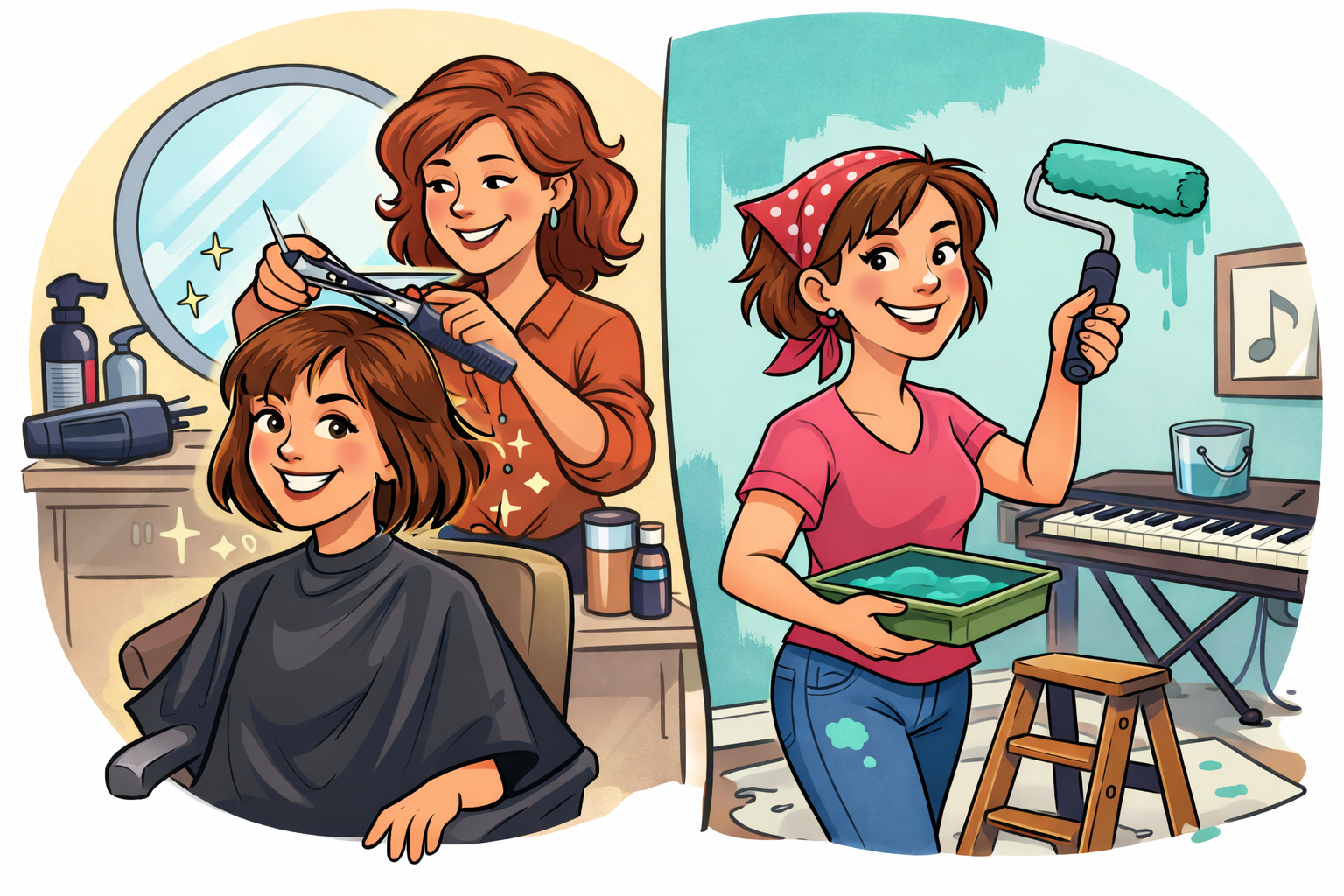
(And yes… historically, when a project is emotionally complete, there’s usually a hairstyle change involved. Or sometimes, I paint my studio a new color.)
But there’s something else I’ve learned — something quieter, and harder to explain.
There is a cycle within the cycle.
From the outside, it can look like distraction or restlessness.
From the inside, it’s discernment.
Only the artist knows when a new idea will feed the current work — and when it will fracture it. The difference isn’t ambition or discipline.
It’s capacity.
Sometimes a new idea brings oxygen to the hard middle.
It restores energy.
It reminds you why you started in the first place.
And sometimes, that same impulse pulls focus, creates noise, and quietly steals strength from what still needs finishing.
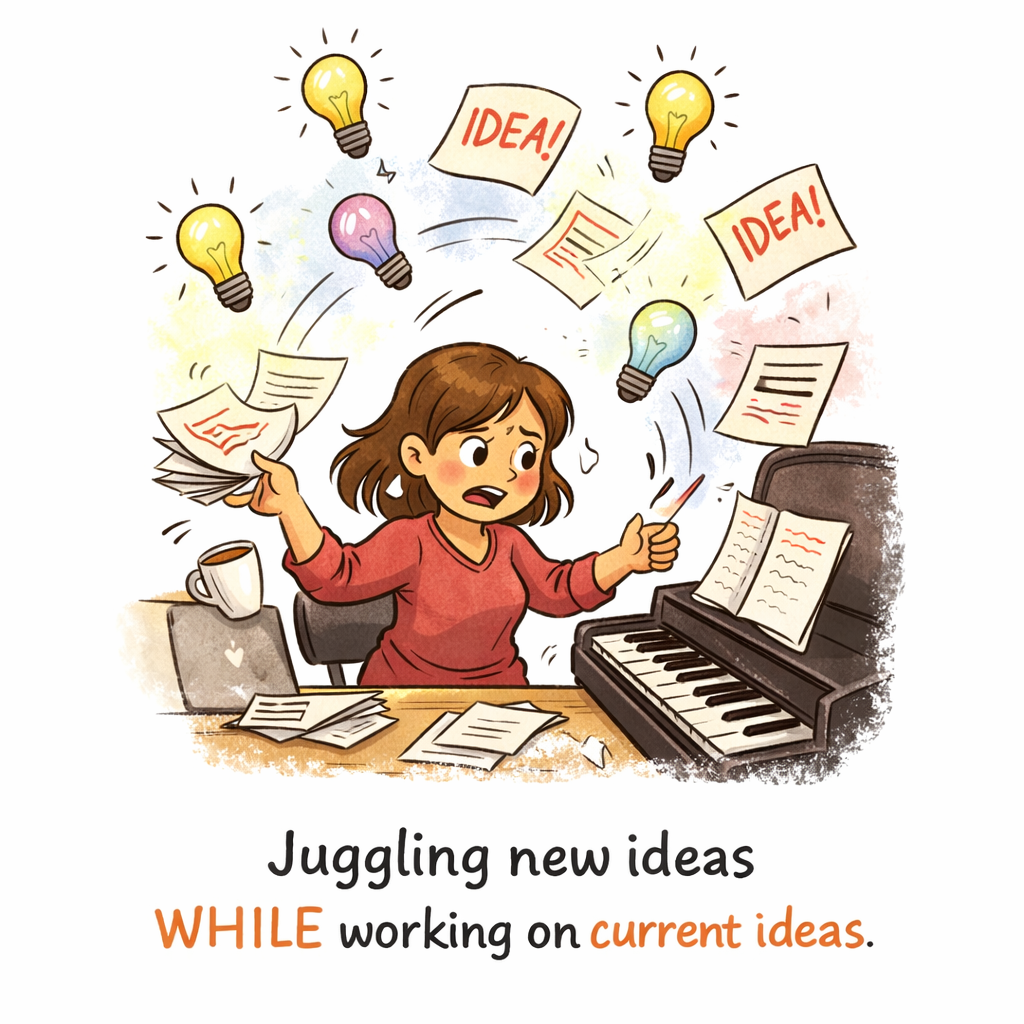
The wisdom isn’t whether artists should have new ideas — we always do. If you stepped into my office, you’d see proof of that in the project folders that live there, each one holding a possibility.
Some ideas need a place to wait.
The wisdom, I’ve found, is knowing when to invite one in — and when to ask it to wait at the door.
Right now, one of those folders has moved to the front of the line — the one labeled LSO 8.20.19 (London Symphony Orchestra). Not because it’s the newest idea, but because it’s the one asking for my full attention.
The timing is right.
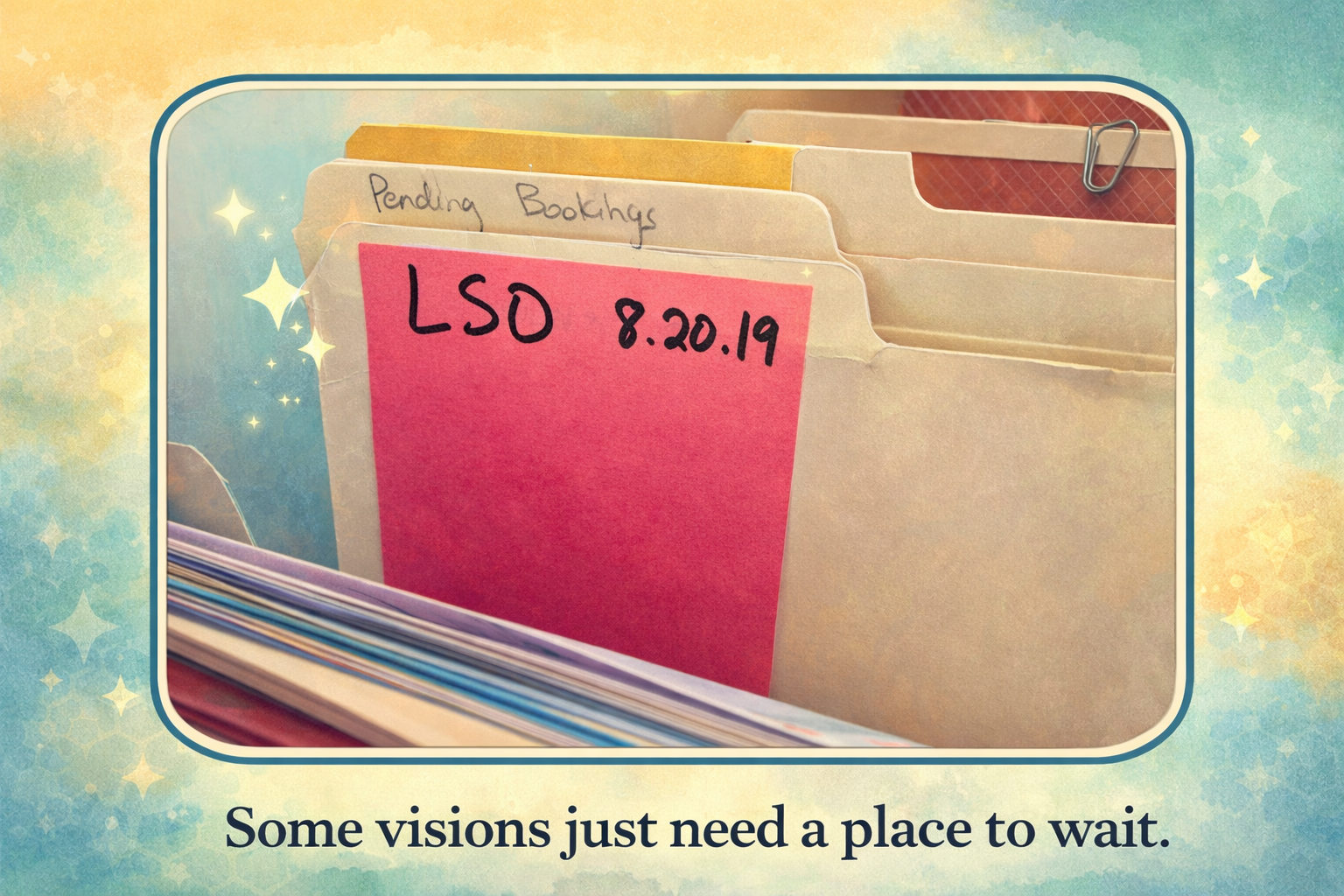
For example, the date on that LSO folder — 8.20.19 — simply marks the day I started it. I sensed then that this might actually happen one day, and it felt important to give it a place to live.
The original seed for a project with this renowned orchestra had been planted even earlier, in 2017.
Just when I thought I was starting to understand the creative cycle that came with working on my own — something gently shifted.
Kirstin entered the picture.
She was an oboist I had worked with for years, who had expressed interest in playing together more intentionally. In 2019, we co-founded our duo, Double Keyed, and everything shifted again when she had the idea to record a Christmas album together.
A new cycle began.
Just for fun, I later pulled out my journal from 8.20.22 — the same date on my LSO folder, but three years later — to see what was happening that day.
One line said it all:
“Double Keyed is mixed and mastered.”
I was referring to Midwinter’s Gift, the project Kirstin and I recorded in Nashville as Double Keyed just weeks earlier. It was her idea — and that one spark gave us our first opportunity to work closely with producer Phillip Keveren — a collaboration that was deeply satisfying, and formative in ways I couldn’t fully see at the time.
When the Work Is No Longer Yours Alone
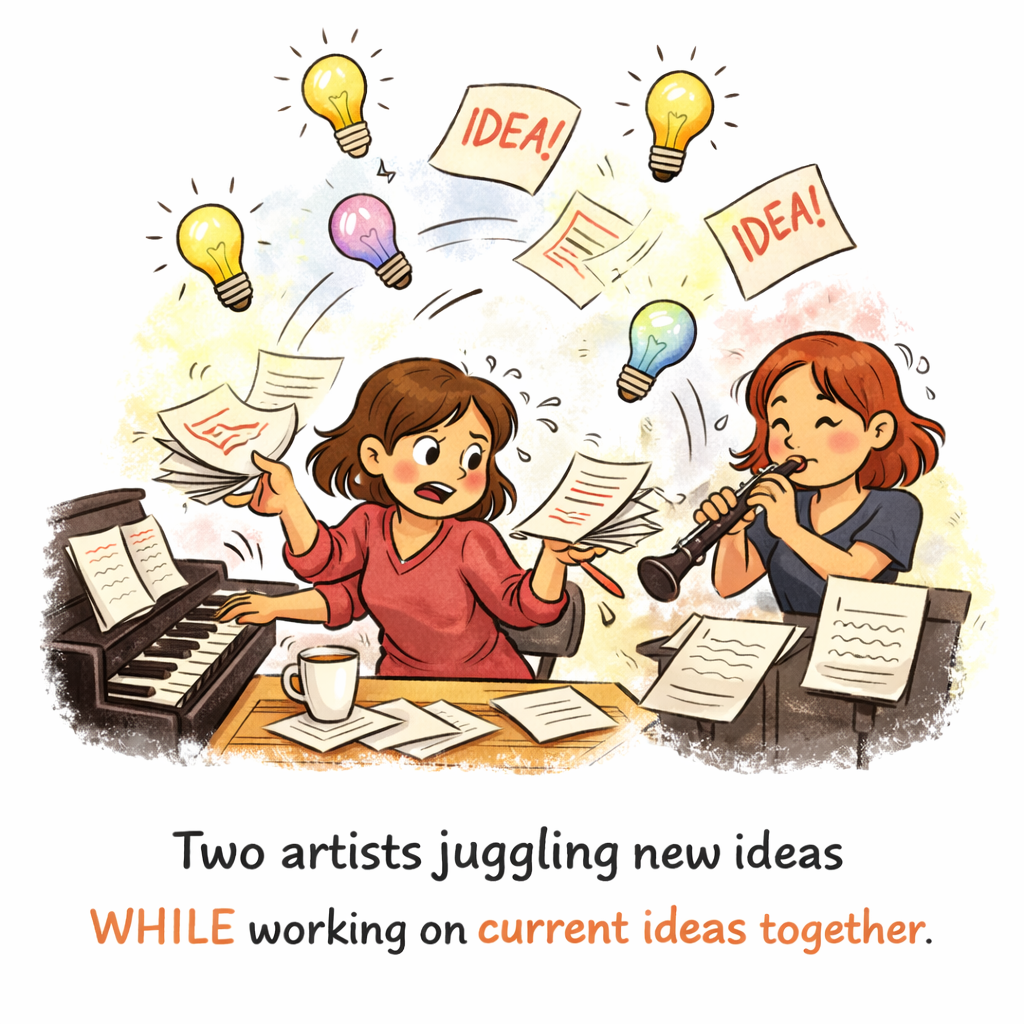
Looking back now, I can see how that project quietly paved the way for the work we’re doing today — together, with Phillip, and with the London Symphony Orchestra.
Talk about cycles.
When we began working on Midwinter’s Gift, the work wasn’t just mine anymore.
I learned that when you add another artist into the mix, the cycle doesn’t disappear — but it does deepen. It also evolves. Now the discernment isn’t only internal; it’s relational.
We’re no longer just asking:
“Is this new idea helpful or distracting?”
We’re asking:
“Can we carry this together?”
There are now two creative energies.
Two internal cycles.
Two instincts about timing, readiness, and rest.
And somehow, the work asks us to listen more closely — not just to the ideas, but to each other.
This kind of collaboration requires trust.
It requires patience.
It requires honoring both the work and the people making it.
And it reminds me that the most meaningful creative seasons aren’t just about what gets produced — they’re about how we learn to move forward together.
Creative work is always a dance between ideas and effort.
When you’re working alone, you learn the steps by feel.
When you’re working together, you learn to listen for the same downbeat.
That’s the work beneath the work.
And it’s worth tending.
A Closing Thought
As a final note, I’ve been moving a little more quietly these past couple of months.
Some seasons ask for less commentary and more attention, and this is one of them. The work around the LSO folder has intensified. We’ll have an update SOON!
I’m grateful for your patience, your presence, and the way you continue to walk alongside Double Keyed as we make — and juggle — this dream.
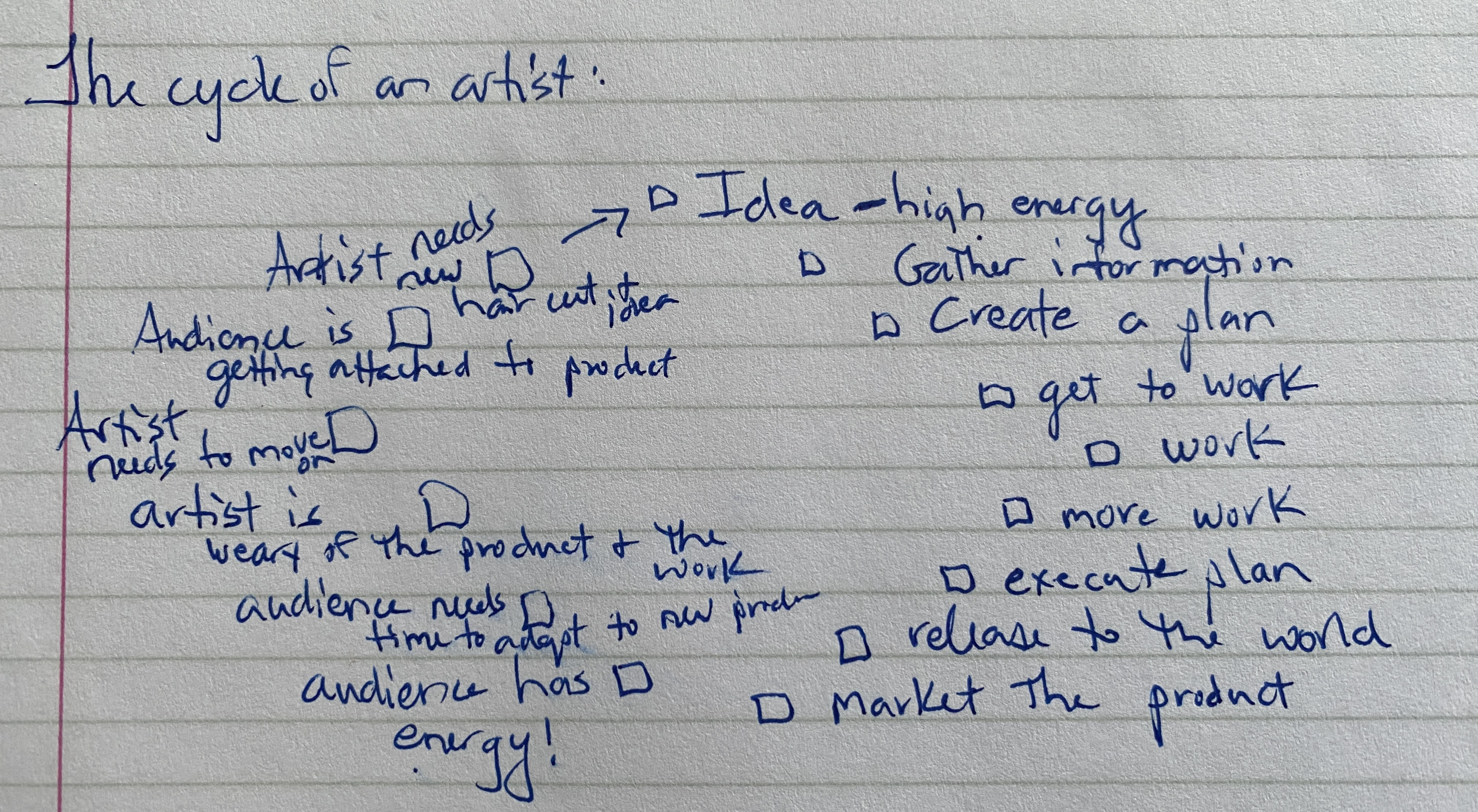
P.S. The cartoon images that accompany this post began as this rough sketch in my journal — lines and arrows trying to make sense of the cycle I am living inside. I’m grateful for the help of ChatGPT in translating that messy, honest drawing into something playful.


 Frances Drost
Leave a comment