
The Quiet Work Before the Sound
If you like a peek inside the rehearsal room—or the storyboards before the actual movie—this is for you.
Back in January 2025, I created a detailed practice plan to prepare for Double Keyed’s upcoming recording with the London Symphony Orchestra at Abbey Road. As of now, I’m working on eight orchestrated pieces—a total of 53 pages of music—but I’ll be adding more soon, as Phillip Keveren just finished arranging the final two tracks!
This isn’t just about playing the notes.
It’s about showing up, staying focused, and letting the music come alive—one day, one phrase at a time.
The Overview: February–December 2025
Time Commitment:
- 4-5 hours of practice per day (Monday–Friday)
- Lighter days on Saturdays
- Sundays off (or optional mental practice)
Guiding Values:
- Rotate through all pieces weekly
- Prioritize the hardest pieces early
- Balance technical, expressive, and mental work
- Maximize my monthly one-hour lessons with my piano teacher
The Four Phases
Phase 1: Foundation & Familiarity (Jan–Mar)
- Learn all notes, rhythms, and fingerings
- Lots of slow, hands-separate work
- Focused daily chunks (2–3 pages at a time)
- Goal: Play each piece slowly but accurately, with correct fingering
Phase 2: Building Fluency (Apr–Jun)
- Increase tempo
- Hands-together practice
- Expressive shaping, dynamics, and phrasing
- Group pieces by difficulty and rotate focus
- Goal: Reach ~75% performance tempo with musical shaping
Phase 3: Performance Readiness (Jul–Sep)
(That’s where I am now!)
- Run through full pieces regularly
- Build stamina and mental endurance
- Begin mock “recording” days
- Goal: Play with confidence, consistency, and expressive clarity
Phase 4: Final Polishing (Oct–Dec)
- Simulate studio sessions
- Record and critique
- Focus on breathing room, phrasing, and emotional delivery
- Goal: Be studio-ready—fully prepared and fully present
My Weekly Practice Structure
Monday–Friday (4-5 hours/day):
- Warm-up (30–45 min): Scales, arpeggios, quick reviews of challenging spots
- Focused Practice (3–4 hours): Rotate 3–4 pieces daily
- Review & Reinforce (1–1.5 hours): Transitions and tempo control
- Playthroughs (30–60 min): Build stamina and flow
Saturday:
- Light review + mental practice (2–3 hours)
- Listen to recordings, reflect, mark scores
Sunday:
- Off—or optional mental listening and visualization
Prioritizing the Pieces
Some pieces require more attention than others, but each piece has its own challenge. I’ve been giving the most difficult works extra time early in the year, while still rotating everything so nothing falls behind.
Some days I change things up a bit—but I always have my ideal schedule to return to.
Having a plan helps relieve the stress that often comes with a project this big.
Mapping it out gives me confidence that I can meet certain goals by specific points in the year. And after suffering a serious cat bite earlier this spring, I was especially grateful that I’d been faithfully following my regimen. Having a plan means you are more prepared up front and saves having to stress over upcoming performances…at least most days. 🙂
Now that I’ll be adding the final two orchestrations to the rotation, the workload will increase—but so will the sense of wholeness.
I’ll finally be working with the complete set.
How I Maximize Monthly Lessons
With just one or two hours per month, I prepare with intention:
Before each lesson:
- Record difficult sections
- Write down specific questions
- Choose 2–3 focus areas to explore
During the lesson:
- Play select sections at tempo
- Ask for feedback on musicality, fingering, and technique
- Plan strategies for the next month
After the lesson:
- Apply feedback directly into my rotation
- Track progress through self-recordings and notes
Why I’m Sharing This
This isn’t just a checklist or a calendar.
It’s the quiet, steady work that makes the music what it is.
The work no one sees—unless they stay for the credits.
Because when I sit down to record with the London Symphony Orchestra, I want to hear more than notes.
I want to hear something that sounds like me.
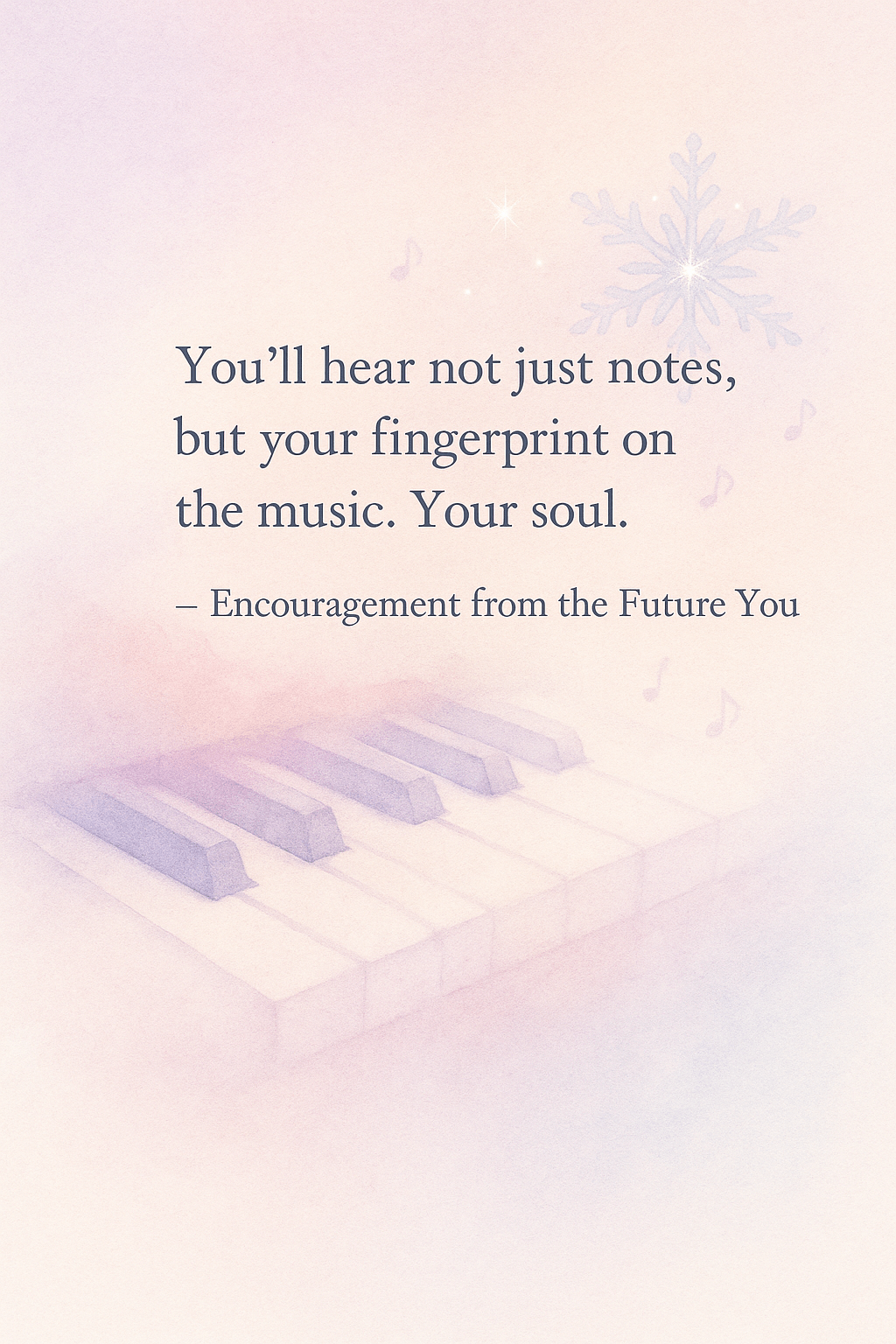
💌 From the Tired Middle
(A note I wrote to myself after asking AI for encouragement during a rough week of practice)
If you want to read more about facing your fears—including the cat bite story—click here.
Want to know more about the London Symphony Orchestra project? Click here.


 Frances Drost
Leave a reply to nmarieshank Cancel reply